
The technology is real, specified, and validated — not vague cleantech marketing. Below is the complete technical picture: how it works, what it measures, and what's confirmed today versus what's still being finalised.
Download datasheet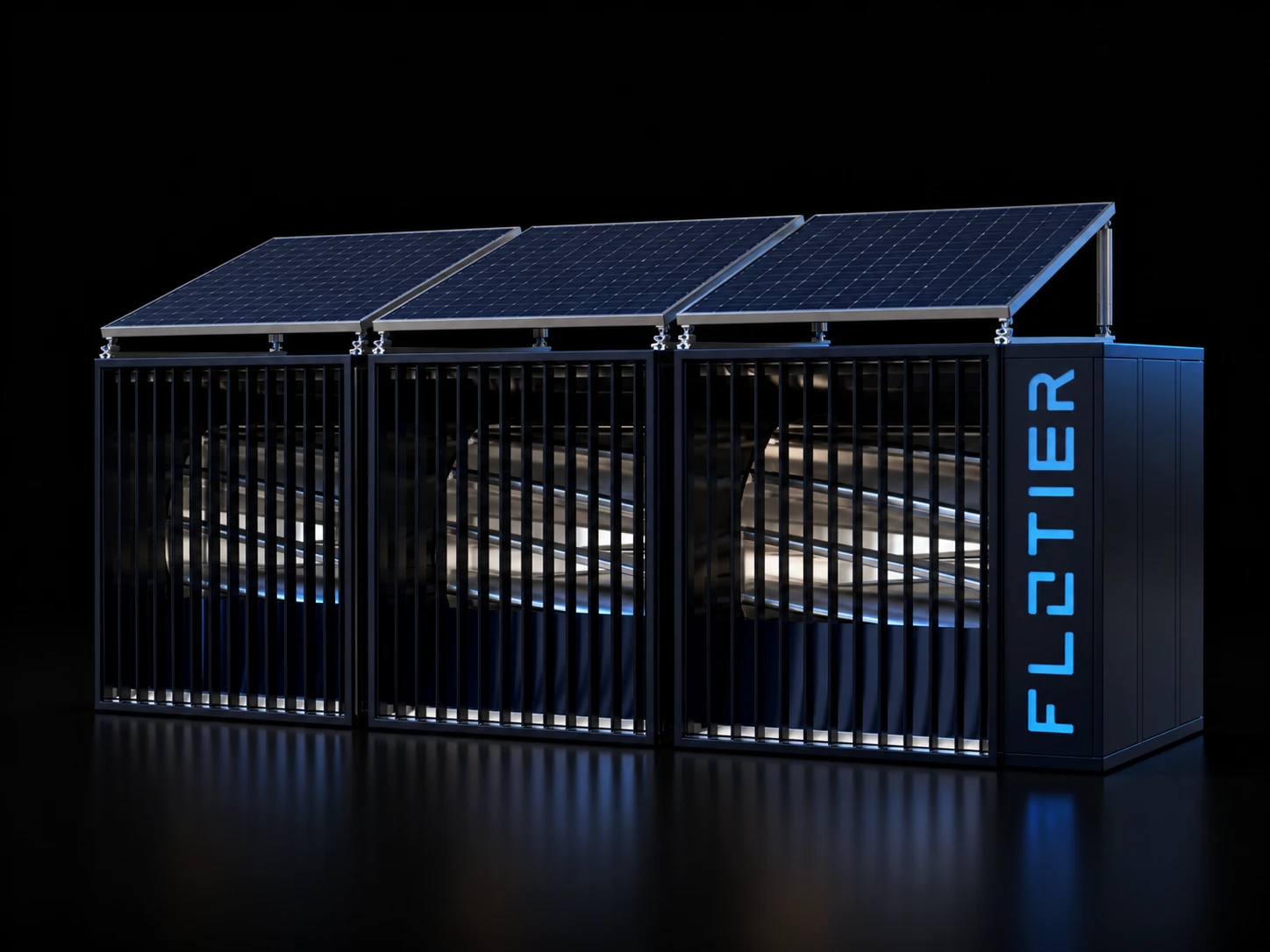
Figures marked tbc are pending final confirmation before publication — they are not estimates presented as fact. Everything else below is drawn directly from the Flotier 100 datasheet.
| Specification | Value |
|---|---|
| Wind speed generation starts at (cut-in) | 3.5 m/s (≈7.8 mph) |
| Minimum operating wind speed | 6 m/s |
| Recommended average annual wind speed | 8 m/s or higher |
| Rated power output (single unit, at 12 m/s) | 150 W |
| System power range (triple-segment system) | 600 W generator, up to 1.2 kW peak |
| Annual energy output, single unit | 298–2,409 kWh/year across 6–20 m/s (see table below) |
| Annual energy output, triple-segment system | up to 5 MWh/year |
| Noise level | ≈40 dB(A), measured at 10 m/s wind speed |
| Unit dimensions (W × H × D) | 1,450 × 1,205 × 1,320 mm |
| Footprint per unit | 1.4 m² |
| Unit weight | 110 kg (160 kg including mounting components) |
| Approximate roof load | 115 kg/m² |
| Electrical output | 3-phase AC generator output, converted via controller to stabilised 48V DC — compatible with battery storage and DC-coupled inverters |
| Design lifetime | 20 years (industrial-grade permanent magnet generator) |
| Wind direction sensitivity | Directional — orient roof edge within ±45° of prevailing wind for best performance |
| Roof compatibility | Flat (with or without parapet) and pitched roofs |
| Patent status | Granted in the Czech Republic; second patent filed, EU-wide process underway |
| Average wind speed | Single-unit output |
|---|---|
| 6 m/s | 298 kWh/year |
| 8 m/s | 649 kWh/year |
| 10 m/s | 1,078 kWh/year |
| 12 m/s | 1,542 kWh/year |
| 14 m/s | 1,909 kWh/year |
| 16 m/s | 2,146 kWh/year |
| 18 m/s | 2,305 kWh/year |
| 20 m/s | 2,409 kWh/year |
As wind meets a building, it accelerates sharply around the rooftop edge — a well-documented aerodynamic effect that most buildings simply lose. Flotier is positioned exactly where this acceleration is strongest.
A patented airfoil geometry captures the accelerated airflow and creates a low-pressure zone that draws additional air through the system — amplifying effective wind speed beyond ambient conditions.
The amplified internal flow drives an enclosed, industrial-grade permanent magnet generator. Its 3-phase AC output is routed through a controller that produces a stabilised 48V DC output, ready for battery storage or a DC-coupled inverter.
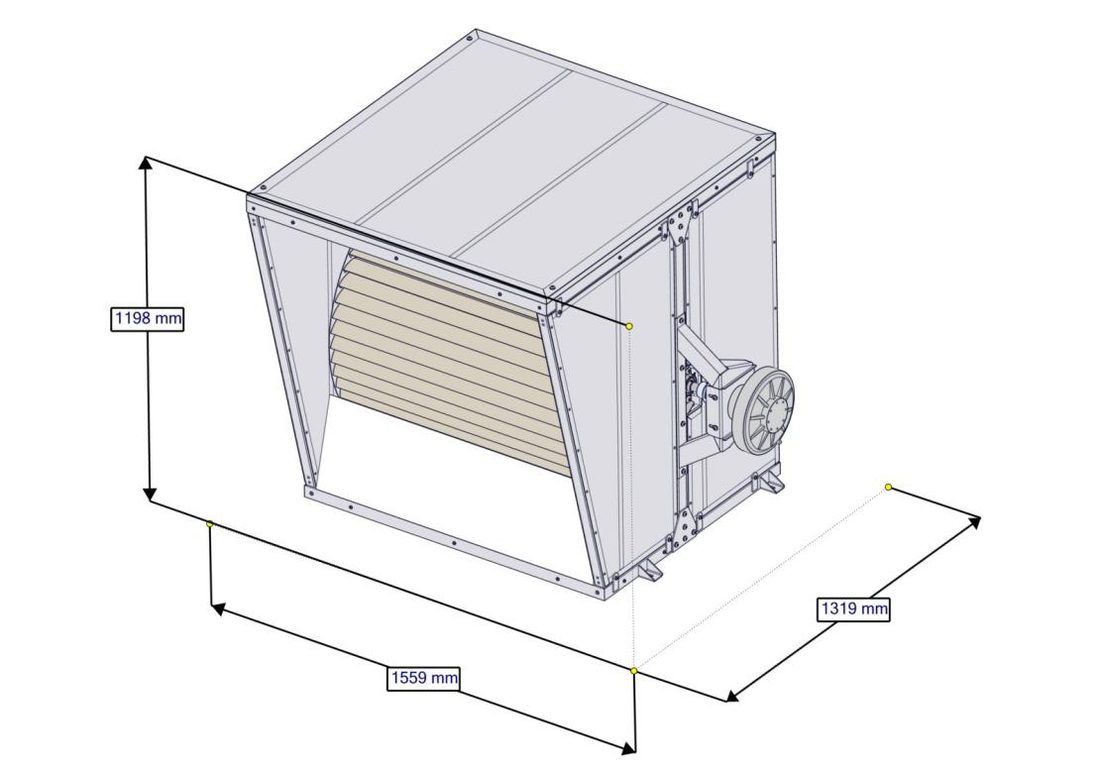
Engineering CAD drawing of the Flotier 100 unit — airfoil blades and internal generator visible.
| CFD simulations run | 600+ |
| R&D hours invested | 4,000+ |
| Wind tunnel testing | Completed, 2025 |
| Test facility & report | Facility name and full report tbc |
CFD streamline analysis across both gabled and flat-roof buildings identified where airflow separates and accelerates at the roof edge — confirming the weak points of standard roof geometry and the strong points Flotier's placement is designed around. This aerodynamic design was then tested and validated in controlled wind tunnel conditions in 2025.
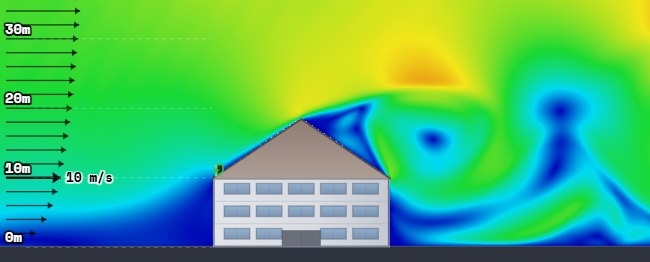
Pitched roof — wind separates and accelerates at the ridge
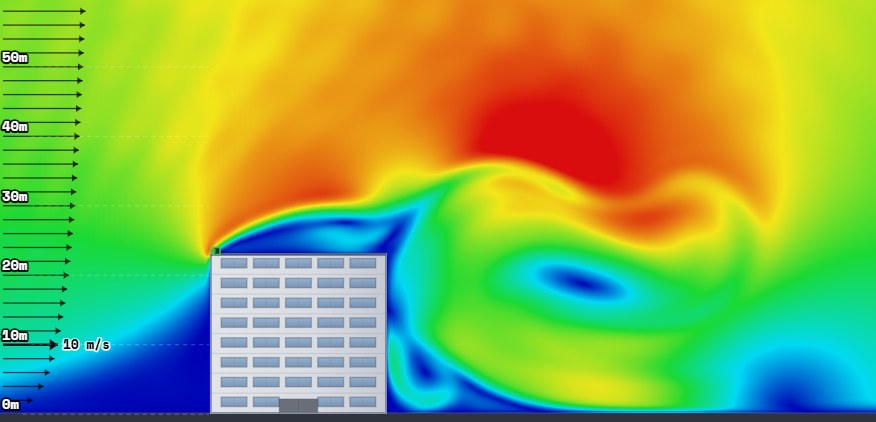
Flat roof — accelerated flow at the leading edge, turbulent wake behind
| Attribute | Flotier | Traditional wind turbine | Solar PV (per m²) |
|---|---|---|---|
| Minimum wind speed | 3.5 m/s cut-in, 6 m/s operating | ≈11 m/s (25+ mph) | Not applicable |
| Noise level | ≈40 dB(A) | High — audible at distance | None |
| Moving parts | Internal only — none visible | Large visible external blades | None |
| Urban applicability | Building-integrated, rooftop edge | Requires open land or mast | Requires unshaded roof area |
| Generates at night / winter | Yes | Yes (where wind allows) | No |
| Planning complexity | Low — no mast, no land use change | High — height, noise, siting | Low |
Granted in the Czech Republic; a second patent is filed with an EU-wide process underway.
Status to be confirmed and updated as certification milestones are reached.
Relevant IEC / EN standards compliance to be confirmed.
Czech and EU building code compliance status to be confirmed.
Backed by CzechInvest ("Czech Republic — The Country for the Future"), the Ministry of Industry and Trade, ČVUT Prague, and the Central Bohemian Innovation Center (SIC).
Full Flotier 100 datasheet: dimensions, performance curve, mounting, and electrical interface.
Download PDF →Summary version of independent test results.
Testing complete — report pendingMarket opportunity, traction, and financials.
Available on requestNeed documentation ahead of publication? Get in touch and our technical team will share what's available.